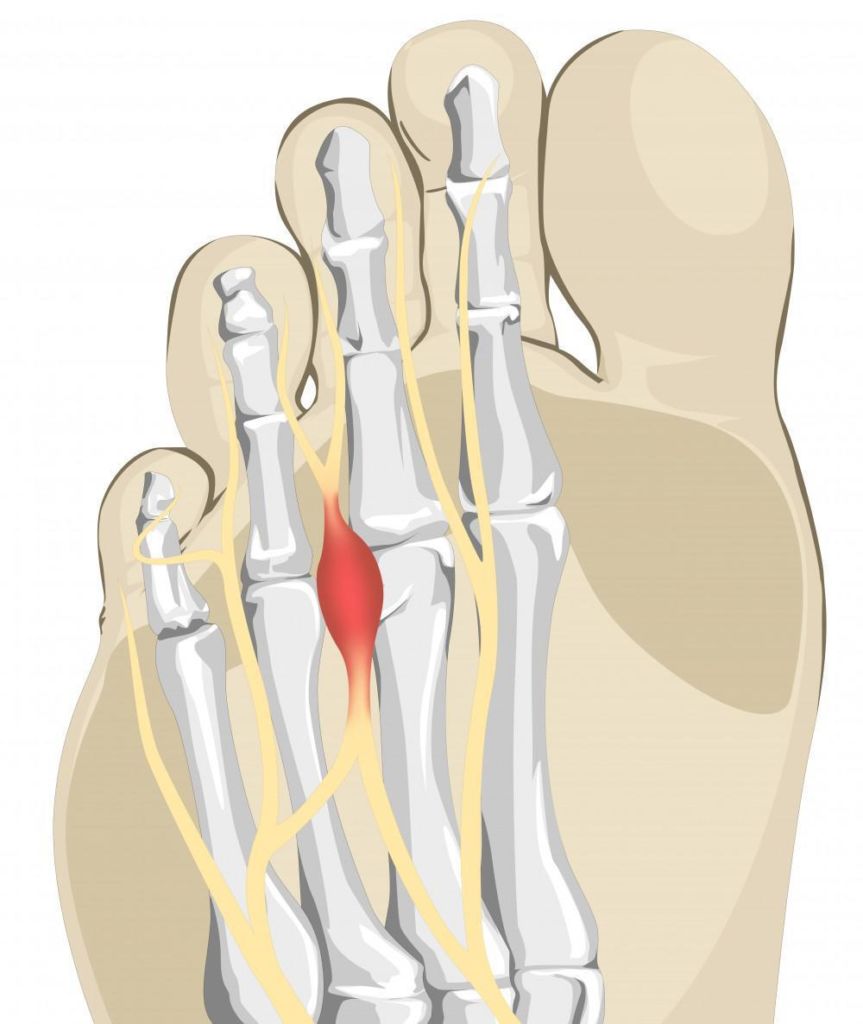
Morton's neuroma is a thickening of nerve tissue in the third or fourth intermetatarsal space of the foot that causes burning, sharp, or numbing pain in the ball of the foot. At Certified Foot and Ankle Specialists, our board-certified podiatric surgeons — credentialed DPM, FACFAS, and ABMSP specialists — diagnose and treat Morton's neuroma across South Florida and Southwest Florida using conservative care, injection therapy, and surgery.
Quick Answers: Morton’s Neuroma
- What is Morton’s neuroma? Morton’s neuroma is a benign thickening of the plantar digital nerve between the third and fourth metatarsal bones, causing burning or sharp pain in the ball of the foot and numbness in adjacent toes.
- What causes Morton’s neuroma? The most common causes are narrow or high-heeled footwear that compresses the forefoot, high-impact activities such as running, and structural abnormalities including flat feet, bunions, or hammertoes.
- How is Morton’s neuroma treated? Most cases improve with conservative care — wider shoes, custom orthotics, metatarsal pads, and corticosteroid or alcohol sclerosing injections. Surgery is recommended when conservative treatment fails after 3–6 months.
- When should I see a podiatrist for ball-of-foot pain? See a podiatrist if burning or sharp pain in the ball of your foot has persisted longer than a few days, worsens with activity, or doesn’t improve when tight shoes are removed.
- Does Morton’s neuroma require surgery? Most patients don’t need surgery. Roughly 80% of mild-to-moderate neuromas respond to conservative treatment. Surgery is considered when pain persists despite 3–6 months of conservative care.
Symptoms of Morton’s Neuroma
Morton’s neuroma causes intermittent or persistent pain in the ball of the foot, typically between the third and fourth toes. Many patients describe the sensation as stepping on a pebble or marble, though nothing is there.
Common symptoms include:
- Burning, sharp, or aching forefoot pain that worsens when walking or wearing tight footwear
- Numbness or tingling in the third and fourth toes, often radiating from the ball of the foot
- A clicking sensation when squeezing the sides of the foot called a positive Mulder’s sign. Your podiatrist can reproduce during examination
- Temporary relief when removing shoes and massaging the forefoot
Symptoms usually develop gradually. If pain is limiting your walking or has persisted more than a few days without improvement, a podiatric evaluation is the right next step.
Conservative Treatment Options for Morton’s Neuroma
Most Morton’s neuroma cases improve with non-surgical care. Our podiatrists follow a staged approach based on symptom severity, neuroma size, and how long you’ve been in pain.
Footwear Modification
Switching to shoes with a wide toe box and a heel height below 2 inches reduces compression on the intermetatarsal nerve. This change alone resolves mild symptoms for many patients within 4–6 weeks. It’s always the first recommendation because it costs nothing and has no side effects.
Metatarsal Pads and Custom Orthotics
Metatarsal pads placed just behind the ball of the foot redistribute weight away from the compressed nerve. When pads alone aren’t enough, custom orthotic devices correct the biomechanical contributors. Flat feet, high arches, abnormal gait that puts chronic stress on the plantar digital nerve.
Corticosteroid Injections
Ultrasound-guided corticosteroid injections reduce inflammation around the affected nerve and provide significant pain relief in 60–75% of patients. Most patients receive a series of 2–3 injections spaced 2–4 weeks apart. Relief typically begins within a few days of each injection.
Alcohol Sclerosing Injections
A series of 4–7 dilute ethanol injections can reduce neuroma size over time by causing controlled fibrous changes in the affected nerve tissue. Studies report 60–89% success rates for sclerosing injection therapy, making it a strong option for patients who want to avoid surgery. According to a 2013 study published in the Journal of Bone & Joint Surgery, ultrasound-guided injections significantly improve outcomes compared to landmark-guided technique.
Activity Modification
Reducing high-impact activities particularly running, court sports, and activities requiring tight footwear decreases repetitive stress on the plantar nerve. Many patients benefit from switching to low-impact exercise such as swimming or cycling during the treatment period.
If conservative treatment hasn’t provided meaningful relief after 3–6 months, surgical evaluation is the appropriate next step.
Conservative Care vs. Surgery: How We Decide
The decision between continued conservative care and surgery depends on neuroma size, symptom duration, your activity goals, and how your body has responded to treatment. This table summarizes the key differences:
Factor |
Conservative Care |
Surgical Treatment |
|---|---|---|
| Best for | Mild to moderate neuromas; early-stage symptoms | Pain persisting 3–6 months despite conservative care |
| Procedures | Orthotics, corticosteroid/alcohol injections, footwear changes, metatarsal pads | Neurectomy or nerve decompression (release of transverse metatarsal ligament) |
| Recovery | Days to weeks | 3–6 weeks (nerve decompression); 6–12 weeks (neurectomy) |
| Success rate | ~80% for mild-to-moderate cases | 75–85% long-term pain relief for neurectomy |
| Incision required | No | Yes — small plantar or dorsal incision, outpatient setting |
| When CFAS recommends | First-line for all new patients regardless of symptoms | After documented failure of conservative care; severe or enlarged neuroma |
Your surgeon decides between the two based on the fracture’s location, how far it’s displaced, whether a joint is involved, and how stable it is once aligned.
What happens during Morton’s neuroma surgery?
There are two primary surgical approaches. Neurectomy removes the affected nerve segment through a small plantar or dorsal incision. Nerve decompression releases the transverse metatarsal ligament to relieve pressure on the nerve without removing it, preserving sensation in the toes.
Both procedures are performed under local anesthesia as outpatient surgeries. Cryosurgery (cryogenic neuroablation) is a minimally invasive option for appropriate candidates. The nerve is cooled to destroy pain signals without excision. Our podiatric surgeons evaluate neuroma size, prior treatment history, and your activity goals to recommend the right approach.
What to Expect After Morton’s Neuroma Surgery
Recovery timelines vary based on the procedure performed and your individual healing.
- Nerve decompression: most patients bear weight in a surgical boot within 1–2 weeks. Return to athletic activity typically takes 6–8 weeks.
- Neurectomy: 3–6 weeks of protected weight-bearing before regular shoe use. Desk-job workers often return to work within 1–2 weeks. Athletes return to sport in 8–12 weeks.
- Cryosurgery: no incision; most patients resume normal shoe wear within a few days. Relief may take 3–4 weeks as the nerve regenerates.
A small percentage of neurectomy patients — approximately 10–15% — develop a stump neuroma, which may require evaluation and retreatment. Your surgeon will discuss this and all other surgical risks during your consultation before any procedure is scheduled.
Morton's Neuroma Treatment Across South Florida and Southwest Florida
Certified Foot and Ankle Specialists treats Morton’s neuroma and other forefoot conditions at locations across Boca Raton, Delray Beach, West Palm Beach, Boynton Beach, Fort Myers, Cape Coral, Tampa, Palm Harbor, and additional South Florida cities.
Our foot and ankle certified physicians perform the full spectrum of conservative and surgical treatments for intermetatarsal neuromas.
Request An Appointment
Frequently Asked Questions About Morton’s neuroma treatment
Q: Does insurance cover Morton’s neuroma treatment?
A: Most major insurance plans cover diagnostic evaluation and conservative treatments for Morton’s neuroma, including corticosteroid injections and custom orthotics. Surgical procedures are typically covered when conservative care has been documented as failing. Our team verifies your specific coverage before your appointment, so there are no billing surprises.
Q: Can Morton’s neuroma go away on its own?
A: Mild neuromas sometimes improve with footwear changes alone, but established Morton’s neuromas rarely resolve without treatment. Delaying care typically allows the neuroma to enlarge, which reduces the effectiveness of conservative treatment and increases the likelihood of needing surgery. Early evaluation gives you the most options.
Q: How long does Morton’s neuroma take to heal?
A: Conservative care — orthotics, footwear changes, activity modification — typically produces improvement within 4–8 weeks. Corticosteroid injections often provide noticeable relief within 1–2 weeks of each injection. Surgical recovery ranges from 6–12 weeks depending on the procedure. Most patients are significantly pain-free within 3–6 months of starting treatment.
Q: How do podiatrists diagnose Morton’s neuroma?
A: Our podiatrists diagnose Morton’s neuroma through physical examination, including the Mulder’s sign squeeze test and palpation of the intermetatarsal space. When the diagnosis is uncertain or neuroma size needs to be confirmed before surgery, ultrasound or MRI imaging provides definitive information. We don’t require imaging for straightforward presentations.
Q: Do I need a referral to see a podiatrist for Morton’s neuroma?
A: Most patients can schedule directly without a referral. Call 1-855-550-FEET or use our online booking tool. If your insurance plan requires a referral, our team coordinates with your primary care physician to make the process as smooth as possible.

