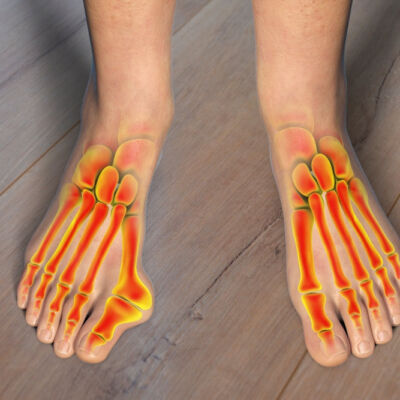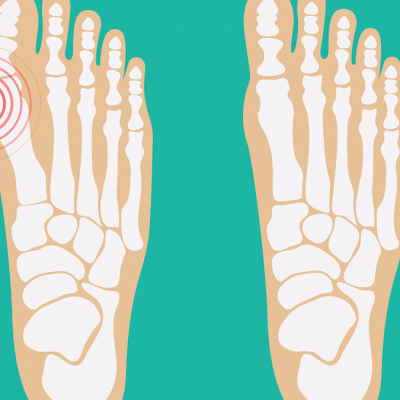
A bunion is a bony bump that forms at the base of the big toe as the first metatarsal joint gradually shifts out of alignment. At Certified Foot and Ankle Specialists, our board-certified podiatric surgeons treat bunions with conservative and surgical options at 14 locations across South and Southwest Florida.
Symptoms of Bunions & When to See a Podiatrist
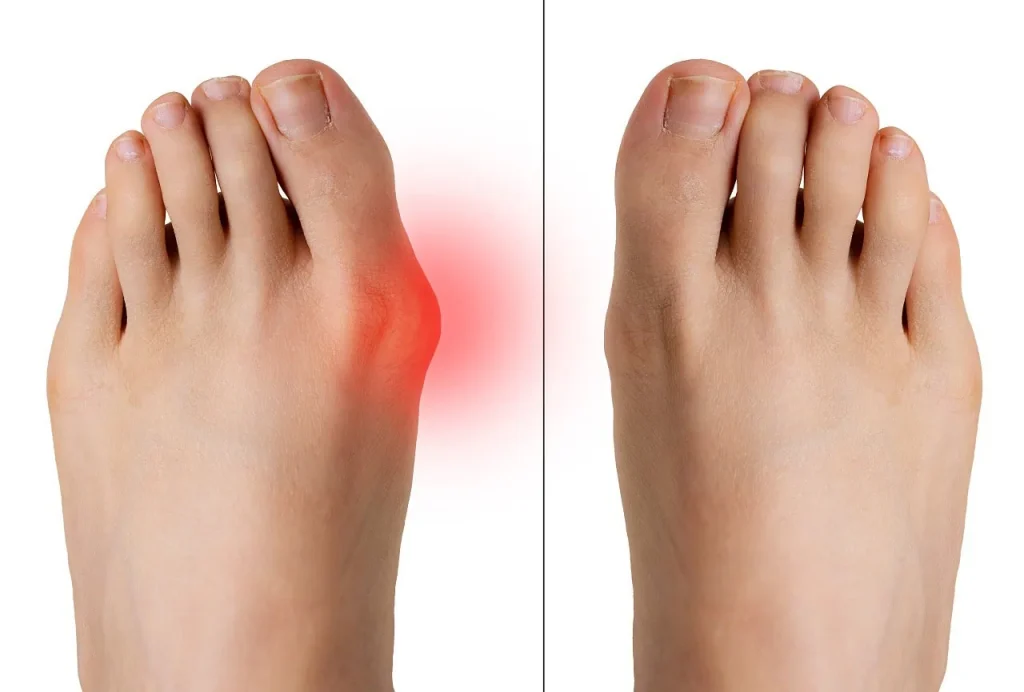
- A visible, bony bump at the base of the big toe
- Pain or tenderness at the big toe joint, especially in shoes
- Redness, swelling, or skin irritation over the bump
- The big toe drifting toward or overlapping the second toe
- Difficulty finding shoes that fit without pressing on the joint
- Corns or calluses forming where the toes rub together
- Limited range of motion in the big toe
Wider shoes and padding can buy time, but not indefinitely. If the bump is visibly growing month to month, pain is keeping you awake at night, or you’re developing open sores over the joint, don’t treat this as something to manage around. Those signs mean the deformity is advancing faster than conservative care can address.
Non-Surgical Treatment Options for Bunions
Conservative treatment won’t reverse a bunion, but it can relieve pain and slow the deformity’s progression significantly. Many patients manage symptoms for years without surgery.
Conservative Treatment Options at CFAS.
Footwear modification
Shoes with a wide, deep toe box take direct pressure off the first metatarsal joint. Pointy or narrow-toed styles accelerate the deformity. A podiatrist can identify the fit criteria you need, not just hand you a brand list.
Bunion pads and gel sleeves
Over-the-counter pads cushion the bump from shoe friction. For patients on their feet most of the day, custom-fitted gel sleeves offer more consistent pressure relief than drugstore options.
Prescription orthotics are cast from a mold of your foot and correct the biomechanical pattern driving the deformity forward. Off-the-shelf insoles don’t provide that level of structural correction.
Splints and night splints
Worn during rest, bunion splints hold the big toe in better alignment and can reduce morning soreness. They won’t straighten the joint, but they slow progression and make the next day more manageable.
Anti-inflammatory medication and cortisone injections
NSAIDs reduce joint pain and swelling during flare-ups. Cortisone injections work faster but aren’t a substitute for structural treatment. Both address symptoms, not the underlying joint mechanics.
Conservative care relieves pain and slows progression. It doesn’t correct the joint. If permanent correction is the goal, surgery is the only option that achieves it.
When Is Bunion Surgery Necessary?
Surgery becomes the right conversation when conservative care has run its course or the deformity itself is the functional problem. Most podiatrists consider it when:
- Conservative care has been tried for 3–6 months without enough relief
- Pain is interfering with work, walking, or daily activities
- The deformity is severe enough to cause toe overlap or skin breakdown
- Arthritis has developed in the first metatarsal joint
- The bunion is advancing rapidly in a younger patient
Our podiatric surgeons choose the procedure based on deformity severity, joint condition, and the patient’s activity level.
Minimally Invasive Bunion Surgery (MIS)
Small 3–4mm incisions reduce soft tissue disruption compared to traditional open surgery. Most patients walk in a surgical boot within days. Full activity typically returns at 6–10 weeks.
Traditional Osteotomy (Austin/Chevron)
The first metatarsal is cut and shifted into correct alignment. A non-weight-bearing period of 2–6 weeks is usually required, with full recovery at 8–12 weeks. Well-suited for moderate deformities.
Lapidus Procedure
Used when the first ray is hypermobile, the Lapidus fuses the first metatarsal-cuneiform joint for more permanent stability than an osteotomy alone. Non-weight-bearing for 6–8 weeks, full recovery at 10–16 weeks.
Lapiplasty 3D Bunion Correction
A patented system that corrects the bunion in all three planes of the deformity, including the rotational component traditional surgery often leaves unaddressed. Clinical data shows lower recurrence rates compared to standard osteotomy. Most patients walk within days and return to full activity by 6–8 weeks.
Bunion Surgery Treatment Options at Certified Foot and Ankle Specialists
| Category | MIS | Traditional Osteotomy | Lapiplasty 3D | Patient Recovery Profile |
|---|---|---|---|---|
| Incision Size | 3–4 mm | 4–6 cm | 4–6 cm | Minimally invasive preferred for cosmetic concerns |
| Weight-bearing | Days post-op | Non-weight-bearing 2–6 weeks | Days post-op | Early mobilization improves outcomes |
| Full Recovery | 6–10 weeks | 8–12 weeks | 6–8 weeks | MIS & Lapiplasty offer faster return to activity |
| Best For | Mild to moderate bunions | Moderate bunions | Moderate to severe; high recurrence risk | Selection based on severity & patient goals |
| Used at CFAS | Yes | Yes | Yes — patented 3D correction | All three techniques available for patient choice |
Where to Get Bunion Treatment Across Florida
Bunion Care Across South and Southwest Florida
Certified Foot and Ankle Specialists operates 14 podiatry clinic locations across Florida. On the East Coast, our surgeons see patients in Boca Raton, Boynton Beach, West Palm Beach, Fort Lauderdale, Pembroke Pines, Coral Springs, Coconut Creek, and Vero Beach. Our West Coast locations serve Fort Myers, Cape Coral, Tampa, St. Petersburg, Palm Harbor, and Brandon. We accept most major insurance plans and online appointment booking is available for all locations.
This video from the surgical team at Certified Foot and Ankle Specialists covers how bunions develop, what conservative treatment involves, and what patients can expect from surgical correction at our Florida locations.
Frequently Asked Questions About Bunion Treatment
Q: Do all bunions require surgery?
A: No. Many patients manage bunion pain with conservative care including custom orthotics, footwear changes, and padding. Surgery becomes necessary when pain persists after 3–6 months of conservative treatment, or when the deformity is severe enough to affect daily function. A board-certified podiatric surgeon can assess your bunion’s severity and recommend the right starting point.
Q: Does insurance cover bunion treatment in Florida?
A: Most major insurance plans cover bunion treatment when it’s medically necessary, including custom orthotics and surgical correction for functional impairment. Cosmetic-only procedures without functional limitation are less commonly covered. Call our office or include your insurance information when booking online and we’ll verify your benefits before your appointment.
Q: How long is recovery after bunion surgery?
A: Recovery depends on the procedure. Minimally invasive surgery allows weight-bearing in a surgical boot within days, with full activity at 6–10 weeks. Traditional osteotomy requires non-weight-bearing for 2–6 weeks and full recovery at 8–12 weeks. Lapiplasty 3D patients generally walk within days and return to full activity at 6–8 weeks.
Q: What’s the difference between a bunionectomy and Lapiplasty 3D Bunion Correction?
A: A traditional bunionectomy corrects the bunion in one or two planes. Lapiplasty 3D corrects all three dimensions of the deformity, including the rotational component that standard osteotomy often leaves unaddressed. Clinical data shows Lapiplasty reduces recurrence risk compared to traditional techniques. Our surgeons will advise whether you’re a candidate at your evaluation.
Q: How soon can I get an appointment at Certified Foot and Ankle Specialists?
A: Most of our 14 Florida locations can see new patients within the same week. Book online through HealOW at certifiedfoot.com or call 1-855-550-FEET.
Ready to Treat Your Bunion? Book an Evaluation.
If bunion pain is limiting your daily life, a podiatric surgeon at Certified Foot and Ankle Specialists can evaluate your options in person. Book a bunion evaluation online or call 1-855-550-FEET.
Get a Bunion Evaluation from a Foot and Ankle Specialist Near You
Not only are foot bunions painful, and cumbersome, but they are somewhat cosmetically unappealing. Bunion treatment includes both conservative/non-surgical and surgical treatment options. If you or someone you know is suffering from a bunion deformity, consult your podiatrist, or foot and ankle surgeon, in regards to bunion treatment options.