Even though bunions are a common foot deformity, there are misconceptions about them. Many people may unnecessarily suffer the pain of bunions for years before seeking bunion surgery treatment.
What You Need to Know About Bunions
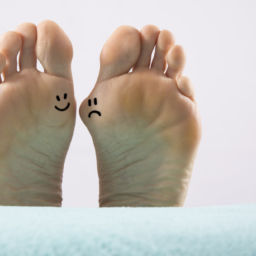
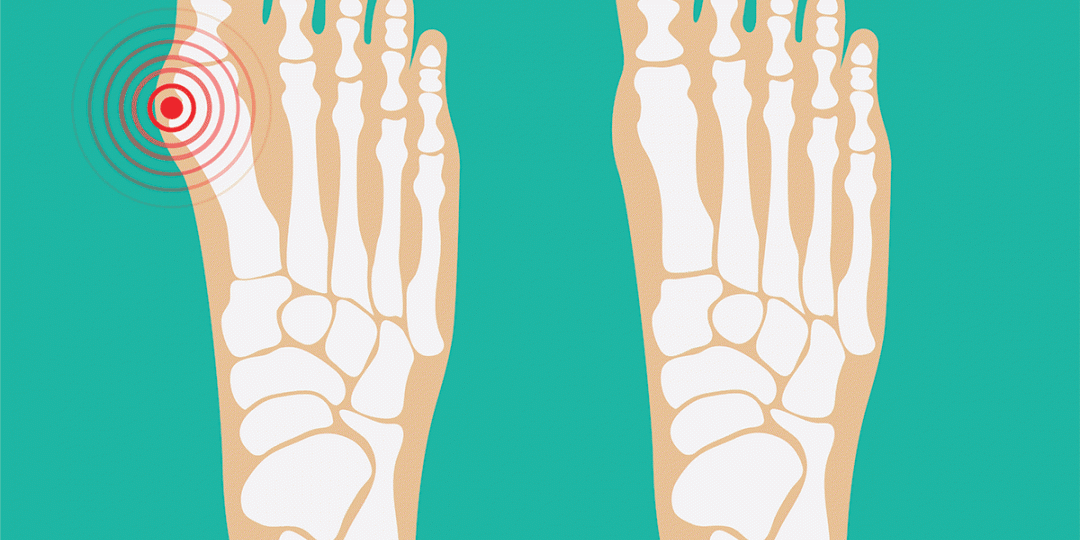
A bunion (also referred to as hallux valgus or hallux abducto valgus) is often described as a bump on the side of the big toe. But a bunion is more than that. The visible bump actually reflects changes in the bony framework of the front part of the foot. The big toe leans toward the second toe, rather than pointing straight ahead. This throws the bones out of alignment – producing the bunion’s “bump.”
Bunions are a progressive disorder. They begin with a leaning of the big toe, gradually changing the angle of the bones over the years and slowly producing the characteristic bump, which becomes increasingly prominent. Symptoms usually appear at later stages, although some people never have symptoms.
Causes Of Bunions
Bunions are most often caused by an inherited faulty mechanical structure of the foot. It is not the bunion itself that is inherited, but certain foot types that make a person prone to developing a bunion.
Although wearing shoes that crowd the toes won’t actually cause bunions, it sometimes makes the deformity get progressively worse. Symptoms may therefore appear sooner.
Symptoms of Bunion Pain
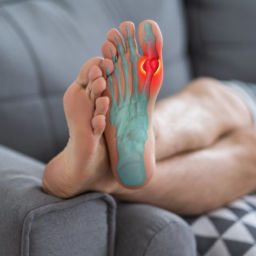
Symptoms, which occur at the site of the bunion, may include:
- Pain or soreness
- Inflammation and redness
- A burning sensation
- Possible numbness
Symptoms occur most often when wearing shoes that crowd the toes, such as shoes with a tight toe box or high heels. This may explain why women are more likely to have symptoms than men. In addition, spending long periods of time on your feet can aggravate the symptoms of bunions and help you determine if bunion surgery is required.
Diagnosis
Bunion are readily apparent – the prominence is visible at the base of the big toe or side of the foot. However, to fully evaluate the condition, the foot and ankle surgeon may take x-rays to determine the degree of the deformity and assess the changes that have occurred.
Because bunions are progressive, they don’t go away, and will usually get worse over time. But not all cases are alike – some bunions progress more rapidly than others. Once your surgeon has evaluated your bunion, a treatment plan can be developed that is suited to your needs.
Non-Surgical Treatment Bunion Pain Treatment
Sometimes observation of the bunion is all that’s needed. To reduce the chance of damage to the joint, periodic evaluation and x-rays by your surgeon are advised.
In many other cases, however, some type of treatment is needed. Early treatments are aimed at easing the pain of bunions, but they won’t reverse the deformity itself. These include:
- Changes in footwear. Wearing the right kind of shoes is very important. Choose shoes that have a wide toe box and forgo those with pointed toes or high heels which may aggravate the condition.
- Padding. Pads placed over the area of the bunion can help minimize pain. These can be obtained from your surgeon or purchased at a drug store.
- Activity modifications. Avoid activity that causes bunion pain, including standing for long periods of time.
- Medications. Oral non-steroidal anti-inflammatory drugs (NSAIDs), such as ibuprofen, may be recommended to reduce pain and inflammation.
- Icing. Applying an ice pack several times a day helps reduce inflammation and pain.
- Injection therapy. Although rarely used in bunion treatment, injections of corticosteroids may be useful in treating the inflamed bursa (fluid-filled sac located around a joint) sometimes seen with bunions.
- Orthotic devices. In some cases, custom orthotic devices may be provided by the foot and ankle surgeon.
When Is Bunion Surgery Needed?
If non-surgical treatments fail to relieve bunion pain and when the pain of a bunion interferes with daily activities, it’s time to discuss surgical options with a foot and ankle surgeon. Together you can decide if surgery is best for you.
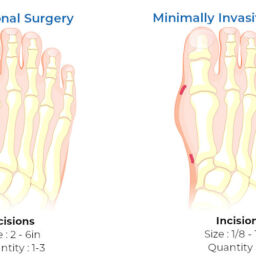
A variety of surgical procedures is available to treat bunions. The procedures are designed to remove the “bump” of bone, correct the changes in the bony structure of the foot, and correct soft tissue changes that may also have occurred. The goal of surgery is the reduction of pain.
In selecting the procedure or combination of procedures for your particular bunion pain treatment, the foot and ankle podiatrist will take into consideration the following
- Extent of your deformity based on the x-ray findings
- Age
- Activity level
- Other factors
The length of the recovery period after bunion pain treatment will vary, depending on the procedure or procedures performed.
Excerpted from https://www.foothealthfacts.org/
Frequently Asked Questions About Bunion Pain Treatment Options
Q. What is the fastest way to get bunion pain relief?
A: For immediate bunion pain relief, apply ice packs several times daily to reduce inflammation, take over-the-counter NSAIDs like ibuprofen, and switch to shoes with a wide toe box. Padding the bunion area and avoiding activities that require prolonged standing can also provide quick relief from discomfort.
Q. Can bunion treatment fix the deformity without surgery?
A: Non-surgical bunion treatment cannot reverse the bony deformity but can effectively manage pain and slow progression. Conservative treatments include wearing proper footwear, using custom orthotics, padding, activity modifications, and anti-inflammatory medications. However, only surgical intervention can correct the structural misalignment.
Q. When should I consider bunion surgery instead of conservative treatment?
A: Bunion surgery becomes necessary when non-surgical treatments fail to relieve pain and the condition interferes with daily activities. Your podiatrist will evaluate factors including the extent of deformity on x-rays, your age, activity level, and pain severity to determine if surgical correction is the best option for lasting bunion pain relief.
Q. What causes bunions to develop and get worse over time?
A: Bunions develop primarily due to inherited foot structure that creates mechanical instability, causing the big toe to gradually lean toward the second toe. While genetics determine susceptibility, wearing tight shoes with narrow toe boxes or high heels accelerates progression and worsens symptoms by crowding the toes.
Q. How effective are custom orthotics for bunion pain relief?
A: Custom orthotic devices prescribed by a foot and ankle surgeon can provide significant bunion pain relief by correcting faulty foot mechanics and redistributing pressure away from the bunion. While orthotics won’t eliminate the bony bump, they effectively reduce pain, slow deformity progression, and improve overall foot function for many patients.