Plantar fasciitis is one of the most common causes of heel pain we see at Certified Foot and Ankle Specialists. If you take your first steps in the morning and feel a sharp, stabbing pain at the bottom of your heel, you are not alone. The good news is that the right stretching exercises for plantar fasciitis can significantly reduce that pain and help you get back on your feet.
Key Takeaways
- Morning stretching matters most: Stretching before your first steps reduces the shock to the plantar fascia after rest.
- Consistency beats intensity: Gentle, daily stretches outperform aggressive, infrequent ones.
- Calf tightness is a major driver: Stretching your calf and Achilles tendon directly relieves tension on the fascia.
- See a podiatrist if pain persists beyond 4–6 weeks: Plantar fasciitis rarely resolves without addressing its root cause.
What Is Plantar Fasciitis?
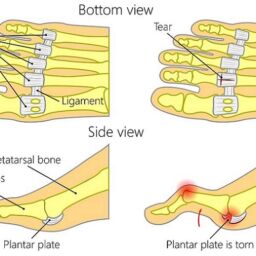
The plantar fascia is a thick band of tissue running along the bottom of your foot, connecting your heel bone to your toes. Repetitive stress, tight calf muscles, high arches, or prolonged standing causes small tears in this tissue, leading to inflammation and pain. Active adults and athletes in South Florida — from runners along the Palm Beach waterfront to pickleball players in Pembroke Pines — are among the most common patients we treat for this condition.
Best Stretching Exercises for Plantar Fasciitis
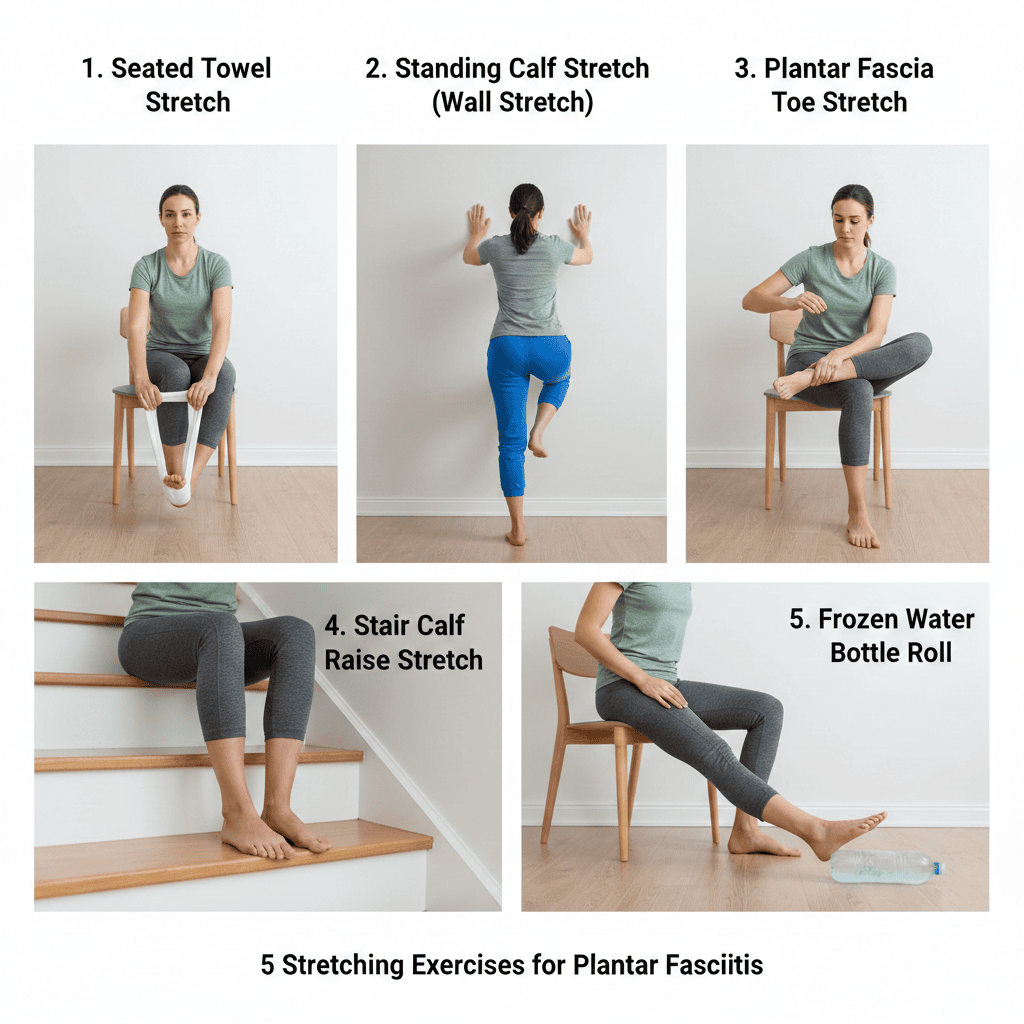
1. Seated Towel Stretch
Sit on the edge of a chair with your affected foot extended and leg straight. Loop a towel around the ball of your foot and gently pull the towel toward you until you feel a stretch along the arch and calf. Hold for 30 seconds and repeat 3 times. This is the single most effective stretch to do before getting out of bed in the morning.
2. Standing Calf Stretch (Wall Stretch)
Stand facing a wall with both hands flat against it. Step your affected foot back and press your heel firmly into the floor, keeping your leg straight. Lean forward until you feel a stretch in your calf. Hold 30 seconds and repeat 3 times per side. Tight calves are a leading contributor to plantar fasciitis, so this stretch directly targets the root cause.
3. Plantar Fascia Toe Stretch
Sit in a chair and cross your affected foot over your opposite knee. Using your hand, gently pull only your toes back toward your shin until you feel a stretch in the arch of your foot. Hold for 10 seconds, repeat 10 times. Research supports this as one of the most effective daily exercises for reducing fascia pain.
4. Stair Calf Raise and Stretch
Stand or sit on a step with only your toes on the edge and your heels hanging off. Slowly lower your heels below the step level until you feel a stretch in your calf, hold for 15–20 seconds, then rise back up. Perform 2–3 sets of 10. This builds strength while improving flexibility — both critical for lasting relief.
5. Frozen Water Bottle Roll
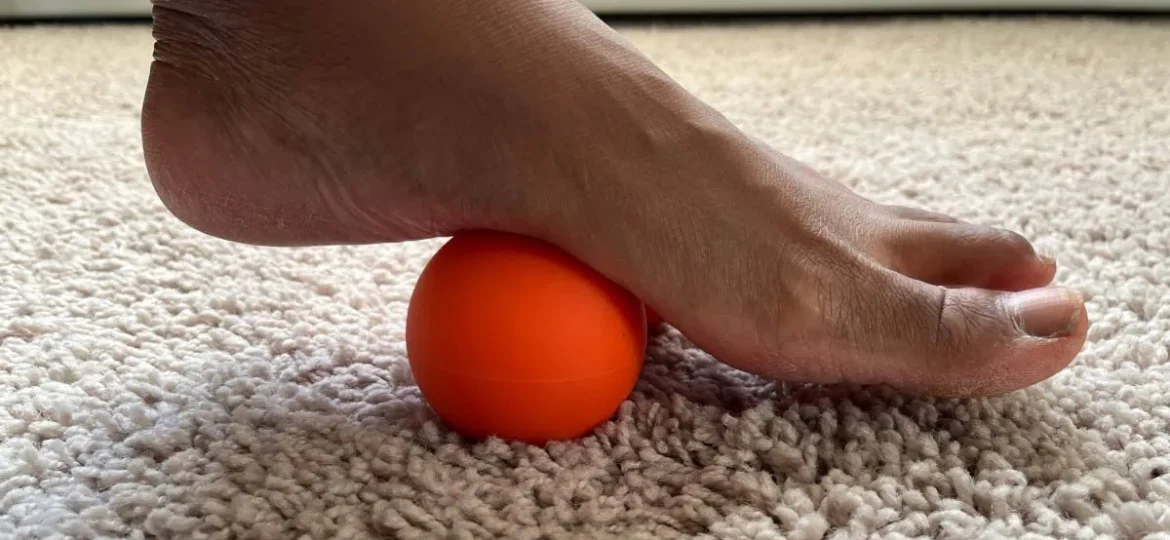
While seated, place a frozen water bottle under your bare foot and slowly roll it from your heel to the ball of your foot for 1–2 minutes. This combines gentle stretching with targeted cold therapy to reduce inflammation after activity. It is especially useful after a long day on your feet.
 When to See a Podiatrist
 When to See a Podiatrist
Home stretching is a strong first step, but it is not always enough. Schedule an appointment at Certified Foot and Ankle Specialists if you experience any of the following:
- Pain that persists beyond 4–6 weeks despite stretching
- Heel pain that worsens rather than improves over time
- Swelling, bruising, or significant changes in how you walk
- Pain in both feet or spreading into the ankle
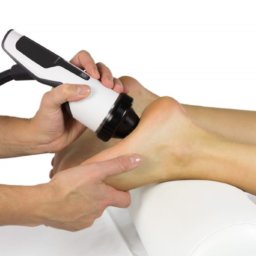
Our board-certified podiatrists at locations across South Florida — including Tampa, West Palm Beach, Boca Raton, Coral Springs, and Pembroke Pines — use advanced diagnostics including digital X-ray and pedCAT scanning to identify structural issues that stretching alone cannot correct. Custom orthotics, shockwave therapy, and other targeted treatments may be recommended based on your evaluation.
Prevention Tips for South Florida Patients
Florida’s warm climate keeps people active year-round, which also means overuse injuries like plantar fasciitis are common. A few simple habits can reduce your risk significantly:
- Replace athletic shoes every 300–400 miles or when cushioning breaks down
- Avoid going barefoot on hard tile or concrete floors at home
- Warm up properly before beach walks, runs, or court sports
- Maintain a healthy weight to reduce stress on the plantar fascia
Get Lasting Relief from Plantar Fasciitis
Stretching exercises for plantar fasciitis are a proven, low-cost way to manage heel pain — but they work best when paired with a professional evaluation. If your pain is not improving, do not wait it out. Our specialists at Certified Foot and Ankle Specialists are ready to help you walk, run, and move comfortably again.
Contact us today to schedule an foot and ankle appointment at a location near you across the East and West Coast of Florida.

Dr. Kyle Kinmon
*Medically Reviewed by: Dr. Kyle J. Kinmon, MS, DPM, FACFAS
This article was reviewed by a board-certified podiatrist with over 15 years of experience in diagnosing and treating foot and ankle conditions. Our practice specializes in comprehensive foot care, from common conditions like tendonitis to complex surgical interventions.