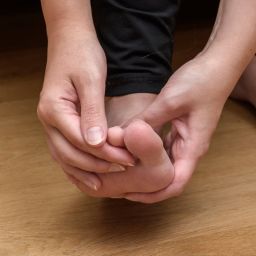

Big toe joint pain affects millions of people and can significantly impact daily activities. Whether you’re experiencing sudden sharp pain or gradual stiffness, understanding what’s causing your discomfort is the first step toward relief.
Key Takeaways
- Multiple conditions cause big toe pain: Including hallux rigidus, gout, turf toe, and various types of arthritis requiring different treatment approaches
- Early intervention improves outcomes: Conservative treatment with rest, ice, and proper footwear often prevents surgery
- Athletes face unique risks: Conditions like turf toe are common in athletes and require specialized sports medicine care
- Persistent symptoms need evaluation: Pain lasting more than a few days or interfering with daily activities warrants professional assessment
- Treatment ranges from conservative to surgical: Options include anti-inflammatory medications, physical therapy, custom orthotics, and in severe cases, joint replacement
What Causes Pain in the Big Toe?
The big toe joint (first metatarsophalangeal joint) bears 40-60% of your body weight during normal walking. This makes it vulnerable to several conditions that cause pain, swelling, and limited mobility. Let me walk you through the most common culprits I see in my practice.
Hallux Rigidus (Big Toe Arthritis)
Hallux rigidus is arthritis of the big toe joint. Cartilage breakdown leads to bone-on-bone contact, bone spurs, and progressive stiffness. Patients often describe pain when pushing off during walking and a noticeable bump developing on top of the joint. This condition worsens over time without treatment.
Local Connection – Miami Heat:
Big toe injuries impact athletes right here in South Florida. This season, Miami Heat All-Star center Bam Adebayo missed six consecutive games due to a left big toe sprain. The injury significantly affected his mobility and performance—demonstrating how even a sprain can sideline elite athletes. His teammate Tyler Herro has also dealt with toe injuries during the 2024-2025 season, highlighting how common these problems are in basketball where players make explosive cuts, jumps, and direction changes that place enormous stress on the big toe joint.
NBA legend Shaquille O’Neal, whose Lakers faced the Heat in multiple championship battles, famously dealt with hallux rigidus throughout his career, ultimately requiring surgery. His case illustrates how big toe arthritis can develop from years of repetitive stress, even in players who receive the best medical care available.
Source references: ClutchPoints NBA coverage (November 2024), Sports Illustrated, ESPN
Gout
Gout attacks happen when uric acid crystals accumulate in the joints. The pain is sudden and severe—patients describe it as the worst pain imaginable. The big toe becomes red, hot, swollen, and so tender that even a bedsheet touching it causes agony. These attacks typically strike at night and require immediate medical management.
Turf Toe
As a podiatrist who works with athletes from the Miami Heat and Inter Miami CF, I see turf toe frequently. This sprain occurs when the toe hyperextends forcefully—common on artificial turf or during sudden stops. Severity ranges from mild ligament strain to complete rupture requiring surgical repair. Athletes need proper diagnosis because playing through turf toe can lead to chronic instability.
Recent Example from Professional Football:
The severity of turf toe became national news this season when Cincinnati Bengals quarterback Joe Burrow underwent surgery for a Grade 3 turf toe injury sustained in Week 2. Burrow, who suffered complete ligament tears in his big toe, missed over three months of the 2024-2025 season. Similarly, San Francisco 49ers quarterback Brock Purdy dealt with a turf toe variant that sidelined him for multiple games. These cases underscore why even elite athletes cannot simply play through this injury—the mechanics of pushing off require a stable, pain-free big toe joint.
Source reference: ESPN NFL coverage, September-November 2024
Sesamoiditis and Other Conditions
Other causes include sesamoiditis (inflammation of tiny bones under the big toe), bunions that alter joint mechanics, and various types of arthritis like rheumatoid or psoriatic arthritis. Each condition has distinct treatment protocols based on the underlying pathology.
Who’s at Risk for Big Toe Pain?
In my practice, certain patterns emerge. Women who wear high heels regularly develop hallux rigidus at higher rates due to chronic joint compression. Athletes in explosive sports (basketball, soccer, football) face increased turf toe risk. People with high arches or flat feet experience abnormal stress distribution across the joint. Family history matters too—if your parents had bunions or arthritis, you’re more susceptible.
Treatment Options: From Conservative to Surgical
Conservative Treatment
Most patients start with non-surgical approaches. Rest, ice (15-20 minutes, 3-4 times daily), and anti-inflammatory medications reduce acute inflammation. I often prescribe custom orthotics to redistribute pressure and recommend shoes with rigid soles to limit joint motion during healing.
Physical therapy improves range of motion through specific exercises and manual therapy. For gout, we manage uric acid levels through medication and dietary changes. Most cases respond well to conservative treatment within 6-12 weeks.
Surgical Solutions
When conservative treatment fails after 3-6 months, surgery becomes an option. My approach depends on several factors: joint damage severity, patient age, and activity goals.
Cheilectomy removes bone spurs and damaged tissue—ideal for mild to moderate arthritis when preserving motion is priority. Recovery takes 6-8 weeks with excellent outcomes.
Joint replacement works well for active patients with severe arthritis who want to maintain mobility. We replace damaged surfaces with synthetic implants, similar to knee replacement but on a smaller scale.
Fusion surgery eliminates joint motion but provides definitive pain relief. This remains the gold standard for end-stage arthritis. Patients adapt quickly—the joint naturally stiffens with arthritis anyway.
Advanced Diagnostic Technology
At Certified Foot and Ankle Specialists, we use pedCAT weight-bearing CT scanners—one of the most advanced imaging technologies available. These 3D scans show exactly how your bones align under load, revealing problems standard X-rays miss. This precision ensures accurate diagnosis and optimal surgical planning when needed.
With 14 locations across Florida, expert care is accessible wherever you are. We accept most major insurance plans and work with your existing healthcare team for coordinated treatment.
Prevention Tips from a Podiatrist
Prevention beats treatment. Choose shoes with wide toe boxes and replace athletic shoes every 400-500 miles. Maintain healthy weight—every extra pound adds 4-6 pounds of pressure on your feet. Address minor issues early before they cascade into bigger problems.
Conclusion
Pain in big toe affects more than just your foot—it impacts your mobility, activity level, and overall quality of life. The good news? Most conditions respond well to appropriate treatment when diagnosed early.
Don’t wait for pain to worsen. Contact Certified Foot and Ankle Specialists to schedule an evaluation with one of our experienced podiatrists. We’ll identify the cause of your symptoms and develop a personalized treatment plan to get you back to the activities you love.
Early intervention leads to better outcomes. Take that first step toward relief today.

Dr. Kyle J. Kinmon
*About the Author: Dr. Kyle J. Kinmon, MS, DPM, FACFAS
This article was reviewed by a board-certified podiatrist with over 15 years of experience in diagnosing and treating foot and ankle conditions. Our practice specializes in comprehensive foot care, from common conditions like tendonitis to complex surgical interventions.
Frequently Asked Questions About Big Toe Pain
Q: What does it mean when your big toe hurts?
A: Big toe pain indicates inflammation, injury, or degenerative changes in the joint. Common causes include arthritis (hallux rigidus), gout, turf toe, sesamoiditis, or bunions. The pain pattern and accompanying symptoms help identify the specific condition.
Q: When should I see a doctor for big toe pain?
A: Seek medical attention if pain persists beyond 3-5 days, prevents weight-bearing, causes severe swelling or redness, follows an injury, or limits your daily activities. Sudden, intense pain (especially at night) may indicate gout requiring immediate treatment.
Q: Can big toe arthritis be cured?
A: Arthritis cannot be reversed, but symptoms can be effectively managed. Conservative treatments (medications, orthotics, physical therapy) control pain for many patients. When these fail, surgical options like cheilectomy, joint replacement, or fusion provide long-term relief.
Q: How long does turf toe take to heal?
A: Mild turf toe (Grade 1) heals in 1-2 weeks. Moderate sprains (Grade 2) require 2-4 weeks. Severe injuries (Grade 3) with ligament rupture may need 6-12 weeks plus potential surgical repair. Athletes should complete physical therapy before returning to sports.
Q: What shoes should I wear for big toe pain?
A: Choose shoes with: wide toe boxes (no compression), rigid soles (limit joint motion), rocker-bottom design (reduce toe bend), and adequate arch support. Avoid high heels, narrow dress shoes, and worn-out athletic shoes. Many patients benefit from custom orthotics.
Q: Will I need surgery for hallux rigidus?
A: Not necessarily. Many patients manage hallux rigidus successfully with conservative treatment. Surgery becomes necessary when pain significantly impacts quality of life despite 3-6 months of non-surgical treatment. About 30-40% of hallux rigidus patients eventually choose surgery.
Q: How can I tell if I have gout or arthritis?
A: Gout causes sudden, severe pain (often at night) with extreme tenderness, redness, and warmth. Arthritis develops gradually with morning stiffness that improves with movement. Blood tests measuring uric acid levels and joint fluid analysis definitively distinguish between the two conditions.
Q: Can I exercise with big toe pain?
A: Low-impact activities like swimming, cycling, or elliptical training typically don’t aggravate big toe pain. Avoid running, jumping, or sports requiring toe push-off until symptoms improve. Physical therapy exercises that strengthen surrounding muscles can actually help—your podiatrist can provide specific guidance.