

Football foot injuries affect millions of players each season, from NFL professionals to weekend warriors.
Foot Pain

A bone spur on top of foot, medically known as an osteophyte, is a bony growth that develops as your body’s response to extra stress or irritation. Unlike the heel spur that forms on the heel bone, these spurs develop on the top of the foot, often affecting the midfoot area where small bones connect.

In our practice, approximately 15-20 patients per week seek treatment for top-of-foot pain. The good news is that most cases respond well to treatment when properly diagnosed and managed.

Waking up or going about your day only to be hit with unexpected foot pain can be alarming—especially if you haven’t suffered any obvious injury.
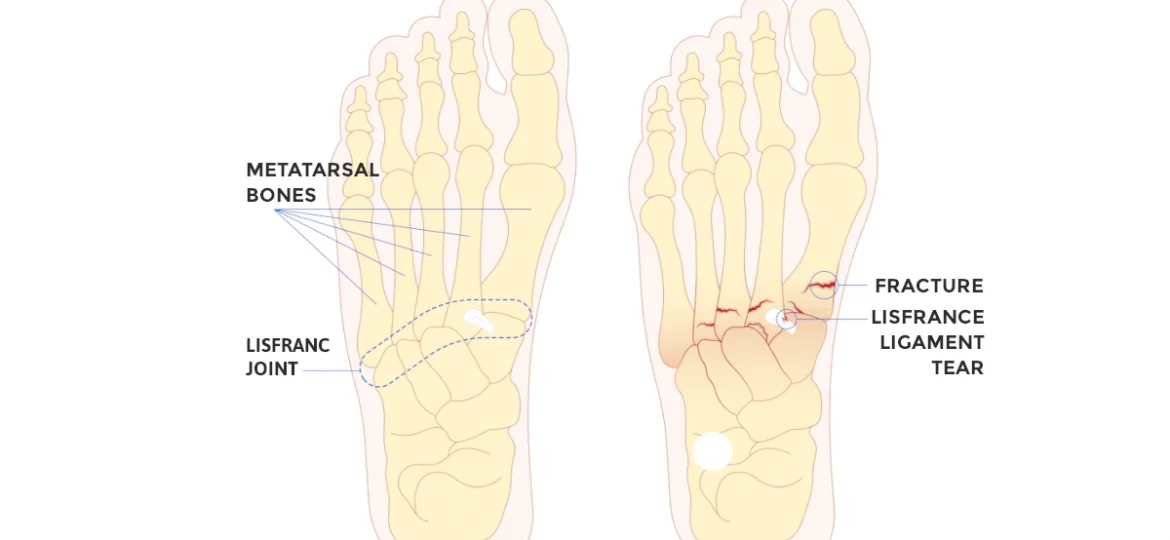
Lisfranc injuries are complex conditions affecting the midfoot, specifically the Lisfranc joint complex includes the tarsometatarsal joints, metatarsal and tarsal bones, as well as the vital Lisfranc ligament that stabilizes these structures.

High arch feet, medically known as cavus foot, is a condition that affects many individuals, often causing significant discomfort and potential long-term complications for foot and ankle health.

If your active child has been complaining about heel pain, especially during or after sports activities, they might be experiencing calcaneal apophysitis, also known as Sever’s disease.

Sciatica, often characterized by sharp, shooting pain that radiates down one leg, is caused by irritation or compression of the sciatic nerve. The sciatic nerve, which runs from the lower back, through the hips, and down each leg, can become inflamed due to conditions such as herniated discs, muscle imbalances, or piriformis syndrome.
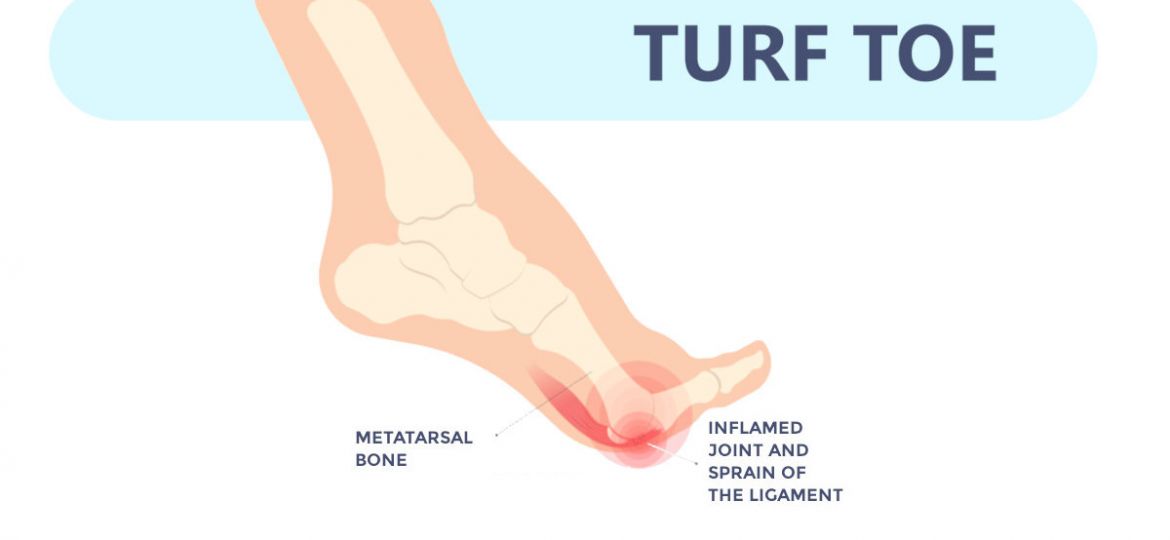
Turf toe is a common sports-related injury that can affect athletes of all levels. While it may sound minor, turf toe can have a significant impact on an individual’s performance and overall well-being.
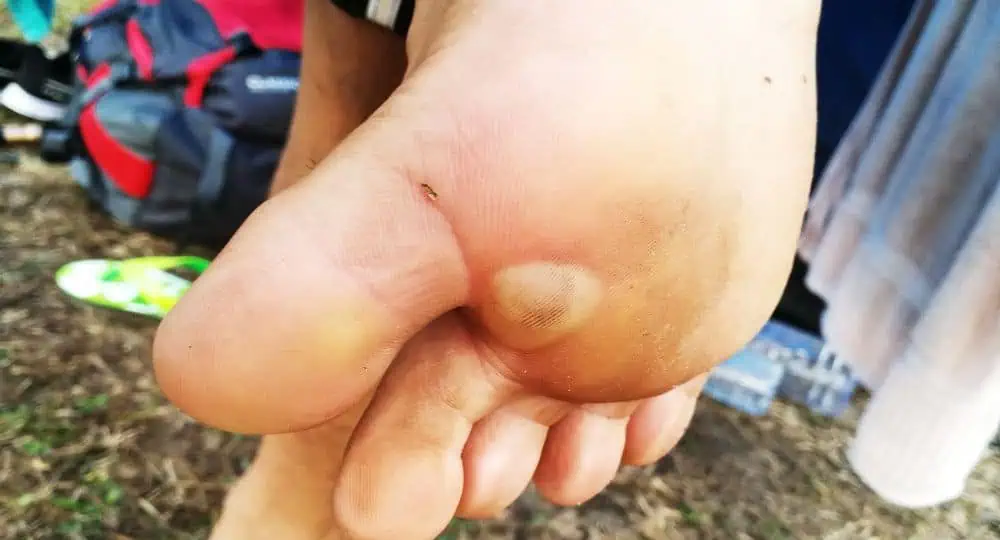
It’s not uncommon for someone to spend extra time walking throughout the day to come home and realize there’s a blister under a foot. Hiking, running, walking, cycling, and other sports can all cause blister development. A painful blister can be caused by many things and make it hard to exercise, walk, or even stand for long periods.