A dislocated ankle is one of the most severe ankle injuries we treat at Certified Foot and Ankle Specialists. This traumatic injury occurs when the bones of the ankle joint—the tibia, fibula, and talus—are forced out of their normal alignment. Understanding this serious condition helps patients recognize when they need immediate medical care and what to expect during the recovery process.
Key Takeaways
- Seek emergency care immediately: A dislocated ankle requires urgent medical attention, as delays can compromise blood supply and cause permanent damage.
- Most dislocations involve broken bones: Ankle dislocations frequently occur alongside fractures of the tibia and fibula, requiring comprehensive treatment.
- Recovery takes 3-12 months: Depending on severity and whether surgery is needed, full recovery can range from several weeks to over a year.
- Physical therapy is essential: Rehabilitation exercises restore range of motion, strength, and stability to prevent long-term complications.
What is a Dislocated Ankle?
A dislocated ankle occurs when there is an abnormal separation between the bones that form the ankle joint. The ankle joint connects your lower leg to your foot, with the tibia and fibula (lower leg bones) meeting the talus (a bone in your foot) to create the ankle mortise. Strong ligaments normally hold these bones tightly together, but severe trauma can tear or stretch these ligaments, allowing the bones to shift out of position.
Unlike an ankle sprain, which involves stretched or torn ligaments while bones remain in place, a dislocation means the bones themselves have moved from their proper anatomical positions. This distinction is critical because dislocations almost always require immediate medical intervention to prevent serious complications.
Types of Ankle Dislocations
Medical professionals classify ankle dislocations based on the direction the talus moves relative to the tibia. The most common type is a posterior dislocation, where the talus shifts backward. Other types include anterior (forward), lateral (sideways), and superior (upward) dislocations. Each type results from different injury mechanisms and may require specific treatment approaches.
Common Causes of a Dislocated Ankle
Ankle dislocations result from high-energy trauma that generates enough force to overcome the strong ligaments holding the joint together. The most common causes include:
- Motor vehicle accidents: Car crashes and motorcycle accidents frequently cause the violent impact needed to dislocate an ankle.
- Falls from height: Landing awkwardly after falling, especially from significant heights, can force the ankle out of position.
- Playing sports: High-impact sports like football, basketball, and soccer can cause ankle dislocations during collisions or awkward landings.
- Workplace injuries: Industrial accidents and construction site falls account for many severe ankle injuries.
Because a significant force is required to dislocate an ankle, patients with this injury often have other associated injuries that require evaluation. Our team always performs a comprehensive assessment to identify any additional trauma to the foot, knee, or other areas.
Symptoms of a Dislocated Ankle
A dislocated ankle produces severe, unmistakable symptoms that typically make it impossible to ignore the injury. If you experience any of these symptoms following trauma to your ankle, seek emergency medical care immediately:
- Severe pain: Intense, immediate pain in the ankle joint that worsens with any attempted movement
- Visible deformity: The ankle appears misaligned, crooked, or clearly out of its normal position
- Inability to put weight on the foot: Walking or bearing weight is extremely difficult or impossible
- Rapid swelling: The ankle joint area swells almost immediately after the injury
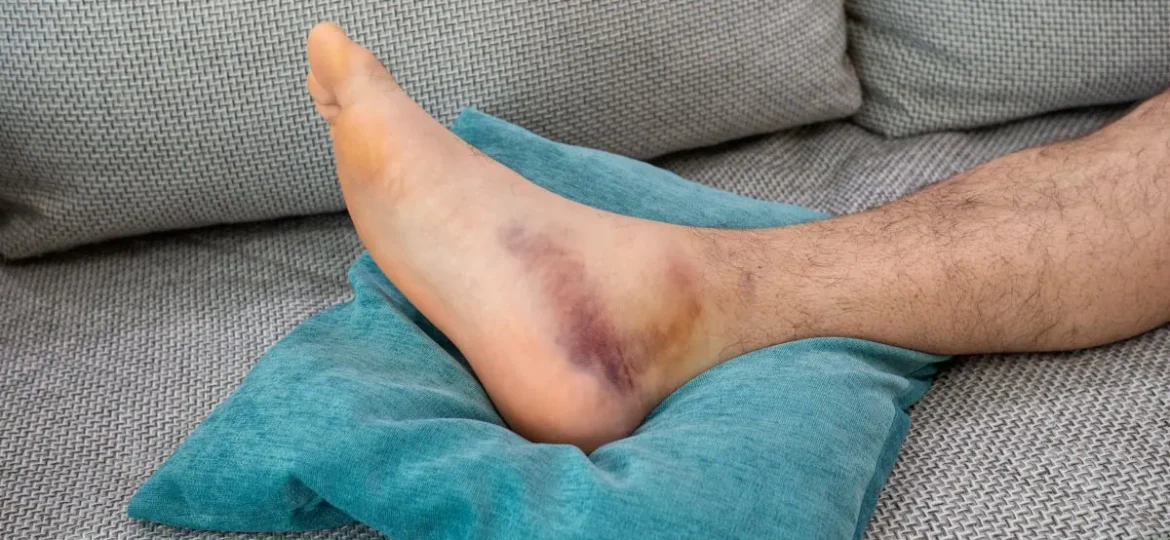
- Bruising (ecchymosis): Discoloration develops quickly around the injured area
- Numbness and tingling: If nerves are affected, you may experience numbness or tingling sensations in the foot
- Cold or pale foot: Changes in foot color or temperature may indicate compromised blood flow
How We Diagnose a Dislocated Ankle
At Certified Foot and Ankle Specialists, our board-certified podiatrists use a comprehensive approach to diagnose and evaluate ankle dislocations. The diagnosis process typically includes:
Physical Examination
We begin with a thorough physical examination, assessing the ankle’s appearance, checking for areas of tenderness, and evaluating blood flow to the foot. The clinical appearance of a dislocated ankle often makes the diagnosis evident, but we perform careful assessments to identify any associated injuries and check that blood vessels are providing adequate circulation.
Diagnostic Imaging
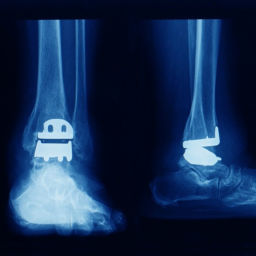
X-rays are essential for confirming the dislocation and identifying any broken bones. Since ankle dislocations frequently occur alongside fractures, X-ray imaging of the leg, ankle, and foot helps us understand the full extent of your injury. In some cases, we may also order a CT scan or MRI to examine the injury in greater detail and assess damage to soft tissues, ligaments, and cartilage. Our Boca Raton and Saint Petersburg Foot and Ankle Clinics have an MRI in-house for faster diagnosis.
Treatment Options for a Dislocated Ankle
Treatment for a dislocated ankle requires prompt medical intervention. The primary goal is to return the ankle bones to their proper position and stabilize the joint to allow healing. Treatment approaches vary based on the severity of the dislocation and whether fractures are present.
Closed Reduction
The initial treatment involves closed reduction—a procedure where the healthcare provider manually moves the bones back into their normal position without surgery. This is performed in the emergency department, often with medications for pain relief and muscle relaxation. If the blood supply to the foot appears compromised, reduction must occur immediately to prevent tissue damage.
Immobilization
After the bones are repositioned, your ankle will be immobilized in a splint or cast to protect the joint while it heals. This prevents the bones from shifting and allows the damaged ligaments and soft tissues to repair. Depending on your injury, you may need to remain non-weight-bearing for 2-6 weeks or longer.
Surgical Treatment
Many ankle dislocations require surgery to remove damaged tissue, repair torn ligaments, and stabilize the ankle bones. Surgery may involve:
- Repositioning and securing ankle bones with screws, plates, or other hardware
- Repairing torn ankle ligaments to restore stability
- Addressing associated fractures of the tibia and fibula
- Repairing damaged nerves or blood vessels when necessary
Our skilled podiatric surgeons utilize minimally invasive techniques whenever possible to promote faster healing and reduce complications.
Medications and Pain Management
Pain management is an important component of treatment. Your provider may prescribe medicines for pain, including over-the-counter medications like nonsteroidal anti-inflammatory drugs or prescription options for more severe discomfort. Some medications can interfere with bone healing, so always follow your provider’s guidance on which countermedicines are safe to use.
Your doctor may also prescribe blood thinners to prevent blood clots in your legs during your recovery period. This is particularly important when you cannot put weight on your ankle for extended periods.
Recovery Timeline and Rehabilitation
Recovery from a dislocated ankle varies significantly based on injury severity and treatment required. Understanding what to expect helps patients prepare for the healing process.
Initial Recovery Phase (Weeks 1-6)
During the first several weeks, the focus is on protecting the ankle and controlling inflammation. Key aspects include:
- Keeping the ankle elevated above heart level to reduce swelling
- Applying cold packs for 15-20 minutes several times daily
- Using crutches, a walker, or a knee scooter to avoid weight-bearing
- Taking prescribed medications as directed
- Attending follow-up appointments to monitor healing
Physical Therapy and Rehabilitation (Weeks 6-12+)
Once your ankle has begun to heal, physical therapy becomes essential for restoring function. A structured rehabilitation program focuses on:
- Gradually increasing range of motion through gentle exercises
- Building strength in the ankle and surrounding muscles
- Improving balance and proprioception
- Progressive weight-bearing exercises as tolerated
- Gait training to normalize walking patterns
Return to Activities
Most patients can return to regular activities within 3-6 months, though severe dislocations may require additional recovery time. Athletes should avoid impact and cutting activities until at least 12 weeks post-injury. Complete recovery, including resolution of swelling and full restoration of strength, may take 6 months to one year.
Warning Signs During Recovery
While recovering from a dislocated ankle, contact your healthcare provider immediately if you experience:
- Shortness of breath or difficulty breathing
- Chest pain or coughing up blood (signs of blood clots)
- Pain in your calf, back of knee, or groin (possible deep vein thrombosis)
- A foot that becomes cold, pale, or changes color
- New or worsening numbness or tingling in the foot or toes
- A cast or splint that feels too tight
- Increased pain, swelling, or signs of infection
Potential Long-Term Complications
Due to the severity of ankle dislocations, some patients may experience long-term effects even with appropriate treatment. Our team works closely with patients to minimize these risks:
- Post-traumatic arthritis: Damage to the cartilage during dislocation can lead to chronic ankle pain and inflammation
- Ankle instability: Weakened ligaments may cause recurring instability requiring additional treatment
- Reduced range of motion: Some patients experience permanent stiffness in the ankle joint
- Chronic pain: Long-term discomfort may persist in some cases
Expert Ankle Care at Certified Foot and Ankle Specialists
At Certified Foot and Ankle Specialists, our board-certified podiatrists have extensive experience treating complex foot and ankle injuries, including dislocated ankles. With 14 locations throughout Florida—including Tampa, Palm Harbor, Boynton Beach, Pembroke Pines, West Palm Beach, and Vero Beach—expert care is always within reach.
Our comprehensive approach includes advanced diagnostic technology, skilled surgical techniques, and personalized rehabilitation programs designed to help you achieve the best possible outcome. We work closely with each patient throughout the recovery process, monitoring progress and adjusting treatment as needed.
If you’ve experienced an ankle injury or are dealing with ongoing ankle pain following a dislocation, don’t wait to seek professional care. Early intervention often leads to better outcomes. Contact Certified Foot and Ankle Specialists today to schedule a consultation with one of our experienced podiatrists.
Conclusion
A dislocated ankle is a serious ankle injury that demands immediate medical attention. Understanding the symptoms, treatment options, and recovery process empowers patients to make informed decisions about their care. With proper treatment from experienced specialists and dedication to rehabilitation, most patients can successfully recover and return to their daily activities.
Remember, if you suspect an ankle dislocation, seek emergency care immediately. The sooner treatment begins, the better your chances of a full recovery. Trust the board-certified podiatrists at Certified Foot and Ankle Specialists to provide the expert care you deserve.
Ready to schedule an appointment? Contact Certified Foot and Ankle Specialists today to find a foot clinic location near you.

Dr. Ashley Bowles
*About the Author: Dr. Ashley Bowles ,DPM
This article was reviewed by a board-certified podiatrist with over 15 years of experience in diagnosing and treating foot and ankle conditions. Our practice specializes in comprehensive foot care, from common conditions like tendonitis to complex surgical interventions.
Frequently Asked Questions About Dislocated Ankles
Q: Can you walk on a dislocated ankle?
A: No. The severe pain and visible deformity of a dislocated ankle make walking or bearing weight virtually impossible. Attempting to walk on a dislocated ankle can cause additional damage to bones, ligaments, and blood vessels.
Q: How is a dislocated ankle different from an ankle sprain?
A: An ankle sprain involves stretched or torn ligaments while the bones remain in their proper positions. A dislocated ankle means the bones have actually separated from their normal alignment. Dislocations are far more severe and almost always require emergency treatment, while many sprains can be managed with rest and conservative care.
Q: How long does it take to recover from a dislocated ankle?
A: Recovery time depends on the severity of your injury and whether surgery is required. Non-surgical cases may heal in 6-12 weeks, while surgical cases may take 6 months to a full year for complete recovery. Physical therapy typically continues for several months to restore strength and mobility.
Q: Will my ankle return to normal after a dislocation?
A: While our goal is always to restore your ankle to its pre-injury function, the reality is that severe dislocations may result in some permanent changes. Many patients experience excellent outcomes with proper treatment and rehabilitation, but some may have lasting stiffness, mild instability, or develop arthritis over time.