
Waking up or going about your day only to be hit with sudden foot pain without an injury – it can be alarming! While foot pain is often associated with accidents or overuse, there are several underlying medical conditions that could be causing discomfort in your foot and ankle. Understanding these conditions can help you find the right treatment plan and relief.
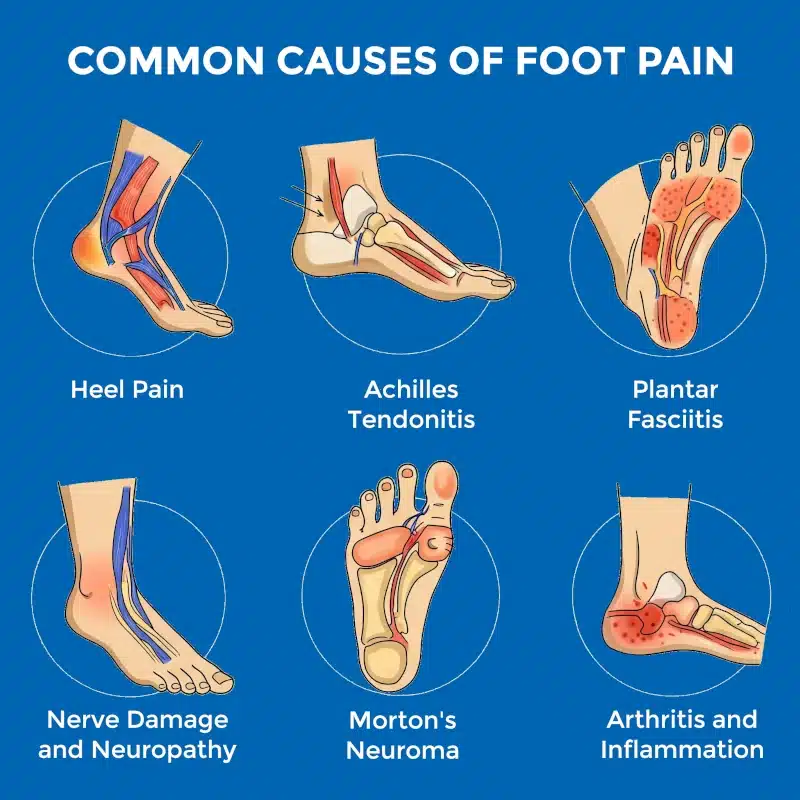
Plantar Fasciitis: A Common Culprit
One of the most frequent causes of sudden foot pain without an injury is plantar fasciitis. This condition occurs when the band of tissue(the plantar fascia) that runs along the bottom of the foot becomes inflamed. It’s often associated with high-impact activities, but it can also develop from wearing poorly fitting shoes, having high arches, or standing for long periods. Pain is usually felt near the heel bone and is most intense when taking the first steps in the morning. Applying ice packs, stretching exercises, and wearing supportive shoes can help alleviate symptoms.
Treatment for Plantar Fasciitis:
- Rest and Ice: Apply a cold compress to the affected area for 15-20 minutes multiple times a day to help minimize swelling and ease discomfort.
- Stretching and Physical Therapy: Stretching exercises that target the plantar fascia and Achilles tendon can help improve flexibility and reduce pain.
- Supportive Footwear: Shoes with proper arch support and cushioned soles can help alleviate strain on the plantar fascia.
- Orthotics and Night Splints: Custom orthotics that fit properly and night splints that stretch the plantar fascia overnight may provide relief.
Achilles Tendonitis: Strain Without Injury
If your pain is concentrated at the back of your foot near your heel, you might be dealing with Achilles tendonitis. This condition occurs when the Achilles tendon, which connects the heel bone to the calf muscles, becomes irritated. It’s often caused by sudden increases in activity or wearing shoes that don’t provide proper support. It is quite common for people to experience sudden foot pain without injury if they suffer from such an issue. Physical therapy, rest, and gentle stretching are often recommended for recovery.
Treatment for Achilles Tendonitis:
- Rest and Ice: Using ice packs on the affected area for short intervals can help soothe pain and decrease swelling.
- Gentle Stretching and Strengthening Exercises: Stretching the Achilles tendon and calf muscles can promote healing and prevent future strain.
- Heel Lifts and Orthotic Inserts: Wearing heel lifts or custom orthotics can relieve tension on the Achilles tendon.
- Physical Therapy: A structured therapy program can improve flexibility and strengthen the muscles supporting the tendon.
Morton’s Neuroma: Nerve Damage in the Foot
Morton’s neuroma occurs when the tissue around the nerves in the foot thickens, leading to pain near the toes. It can feel like a sharp, burning pain or even a sensation of a pebble inside your shoe. This condition is common among people who frequently wear poorly fitting footwear, particularly high heels or tight shoes.
Treatment for Morton’s Neuroma:
- Switching to Proper Footwear: Wearing wider, supportive shoes with a low heel and cushioned soles can reduce nerve irritation.
- Orthotic Inserts: Custom shoe inserts can provide extra padding and relieve pressure on the affected nerve.
- Ice Therapy and Anti-Inflammatory Medications: Applying ice and taking NSAIDs can help reduce swelling and discomfort.
- Corticosteroid Injections: In severe cases, steroid injections can help alleviate pain and inflammation.
Nerve Damage and Neuropathy
Nerve-related foot pain, also known as neuropathy, can develop suddenly and without an obvious injury. People with diabetes or circulation issues are more prone to nerve damage, which can cause sharp, tingling, or burning pain in the foot and ankle.
Treatment for Neuropathy:
- Blood Sugar Management: For diabetic neuropathy, maintaining healthy blood sugar levels is essential.
- Medications: Prescription medications like gabapentin or pregabalin may help manage nerve pain.
- Vitamin Supplements: If caused by a vitamin deficiency, B-complex vitamins can support nerve health.
- Physical Therapy: Exercises that improve circulation and nerve function can aid in symptom management.
Arthritis and Inflammation
Foot pain can also be a sign of arthritis, particularly if the pain comes with stiffness and swelling. Osteoarthritis and rheumatoid arthritis can cause discomfort in the foot joints, making it painful to walk or stand.
Treatment for Arthritis:
- Anti-Inflammatory Medications: Over-the-counter NSAIDs like ibuprofen can help reduce inflammation and pain.
- Custom Orthotics and Supportive Shoes: Properly fitted shoes and custom orthotics can improve foot alignment and ease discomfort.
- Physical Therapy: Strengthening exercises and mobility work can reduce stiffness and improve function.
- Lifestyle Changes: Weight management and low-impact activities like swimming or cycling can help reduce joint strain.
Find Relief from Sudden Foot Pain Without An Injury Today!
The right treatment plan depends on the underlying cause of your foot pain. A podiatrist will assess your symptoms and recommend a combination of treatments such as physical therapy, supportive footwear, orthotics that fit properly, pain management techniques, and in some cases, medication or minimally invasive procedures. Early intervention is key to preventing further complications and restoring mobility.
If you’re experiencing sudden foot pain without injury, don’t wait for it to get worse. The team at Certified Foot and Ankle Specialists is here to help diagnose the cause and create an effective treatment plan tailored to your needs. Contact us today to schedule an appointment and take the first step toward pain-free movement!

Dr. Kyle Kinmon
*About the Author: Dr. Kyle J. Kinmon, MS, DPM, FACFAS
This article was reviewed by a board-certified podiatrist with over 15 years of experience in diagnosing and treating foot and ankle conditions. Our practice specializes in comprehensive foot care, from common conditions like tendonitis to complex surgical interventions.
The following FAQs are answered by our board-certified podiatrists at Certified Foot and Ankle Specialists, drawing from decades of clinical experience treating foot conditions across Florida.
Frequently Asked Questions: Sudden Foot Pain Without Injury
Q: Can nerve entrapment cause sudden foot pain even without an obvious injury?
A: Yes, nerve entrapment can develop gradually without a specific traumatic event. Conditions like Morton’s neuroma occur when tissue thickens around foot nerves, creating sharp or burning pain that feels like a pebble in your shoe. Peripheral neuropathy, especially common in people with diabetes or circulation issues, can cause sudden tingling, burning, or sharp nerve pain in the foot. These nerve-related conditions often develop from repetitive pressure, poorly fitting footwear, or underlying health conditions rather than acute injuries.
Q: How does plantar fasciitis develop without any obvious foot injury?
A: Plantar fasciitis occurs when the plantar fascia—the band of tissue running along your foot’s bottom—becomes inflamed from accumulated strain rather than acute trauma. This condition commonly develops from wearing poorly fitting shoes, having high arches, standing for extended periods, or sudden increases in activity levels. The pain typically appears gradually and is most intense during your first morning steps near the heel bone. While it feels sudden when symptoms emerge, plantar fasciitis usually results from repetitive stress building over time.
Q: Are stress fractures possible in the foot without experiencing a traumatic injury?
A: Absolutely. Stress fractures are tiny cracks in foot bones caused by repetitive force and overuse rather than a single traumatic event. They commonly affect runners, dancers, and athletes who suddenly increase training intensity or duration without proper conditioning. People with high arches, osteoporosis, or inadequate footwear are particularly vulnerable to developing stress fractures. The pain typically starts mild and worsens with weight-bearing activities, often appearing on the top of the foot or near the toes without any recalled injury moment.
Q: What causes tendonitis strain in the foot when no injury occurred?
A: Tendonitis develops when tendons become irritated and inflamed from repetitive motions, overuse, or biomechanical stress rather than acute injury. Achilles tendonitis, for instance, commonly occurs from sudden activity increases, wearing unsupportive shoes, or having tight calf muscles that strain the heel-connecting tendon. The pain concentrates at the back of the foot near the heel and worsens with movement. Similarly, extensor tendonitis on the foot’s top can develop from tight shoelaces or structural foot abnormalities creating chronic irritation.
Q: Can arthritis cause sudden foot pain even though it’s a chronic condition?
A: Yes, arthritis can cause sudden pain flare-ups despite being a progressive, chronic condition. Both osteoarthritis from joint wear-and-tear and rheumatoid arthritis from autoimmune inflammation can produce episodes of acute pain, stiffness, and swelling in foot joints without any new injury. These flare-ups may be triggered by weather changes, overactivity, dietary factors, or inflammation cycles. The pain often makes walking or standing difficult and is typically accompanied by joint stiffness, particularly noticeable in the morning or after periods of rest.