
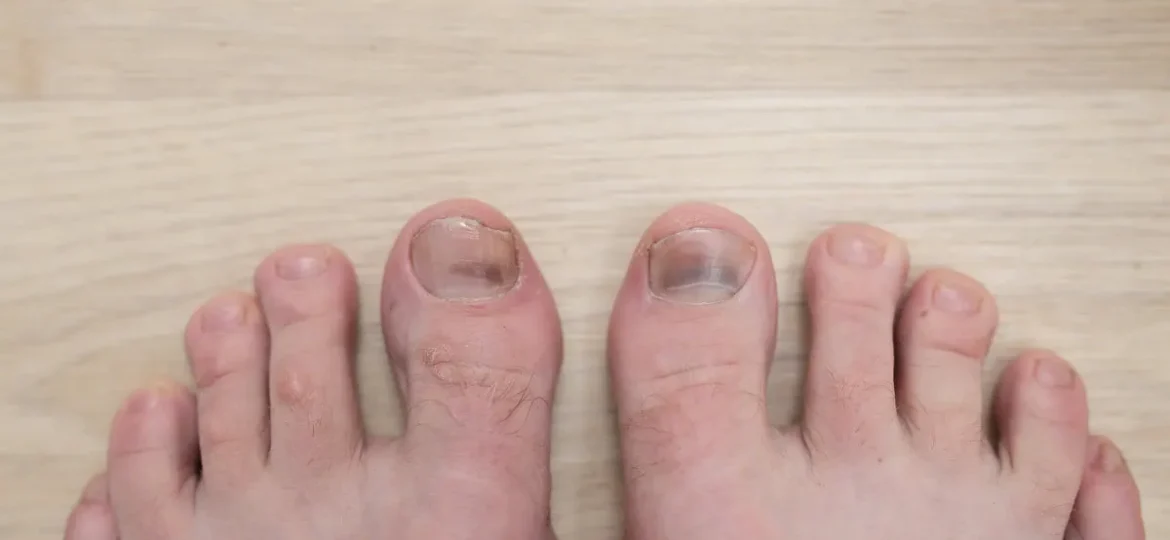
‘Dark spot on toenail!’ It can be a surprising and sometimes alarming discovery. Whether you’ve noticed a small black speck or a larger brown discoloration, these changes can prompt questions and concerns about their origins and what they mean for your health. In this blog, we’ll dive deep into the common causes of a dark spot on toenail, including toenail fungus, trauma, and more serious conditions like nail melanoma. Understanding these factors can help you make informed decisions about when to seek professional care, especially from trusted experts like Certified Foot and Ankle Specialists.
What Causes a Dark Spot on Toenail?
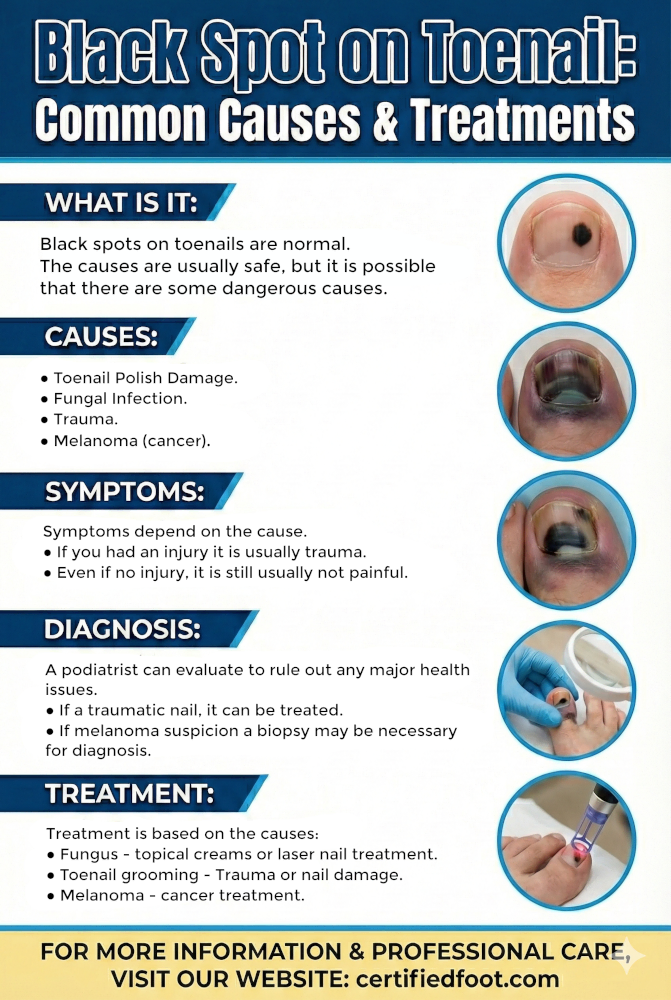
Several factors can contribute to dark spot on toenail, ranging from minor injuries to infections and underlying health conditions. Let’s explore three of the most common causes and how to recognize them:
1. Subungual Hematoma: Trauma Beneath the Surface
A subungual hematoma occurs when blood vessels under the nail bed are damaged, typically from trauma such as stubbing your toe or wearing shoes that squeeze the toes too tightly. The resulting blood buildup creates a dark, often painful spot beneath the nail. While mild cases usually resolve without intervention, severe trauma might require a podiatrist to drain the blood and relieve pressure. Ignoring persistent pain or discoloration can lead to more serious issues, including nail loss or infection.
2. Toenail Fungus: The Silent Invader
Toenail fungus, or onychomycosis, is a common and persistent cause of nail discoloration. Fungi thrive in warm, moist environments, making feet the perfect target—especially for those who frequently wear closed-toe shoes or keep nail polish on for long periods. Infected nails may turn yellow, brown, or even black as the fungus spreads and damages the nail structure. If left untreated, this condition can lead to brittleness, thickening, and sometimes a foul odor. Effective treatment often includes antifungal medications or, in stubborn cases, laser therapy.
3. Infections and Compromised Immunity: A Deeper Concern
People with weakened immune systems are particularly vulnerable to various infections, including those affecting the nails. Fungal and bacterial infections can cause dark spots, nail thickening, and even the nail lifting from the bed. These symptoms might be accompanied by swelling, redness, or discharge, signaling a more severe problem. Early detection and treatment are vital to prevent the infection from spreading or causing permanent damage to the nail.
Prevention and Care: Protecting Your Toenails
Maintaining healthy toenails goes beyond aesthetics – it’s a crucial part of overall foot health. By following a few simple practices, you can reduce the risk of developing dark spots and other nail issues.
Choose the Right Footwear
Opt for shoes that fit well and provide ample support. Tight shoes can lead to repeated trauma and subungual hematomas, while poorly ventilated footwear can create the perfect breeding ground for fungal foot infections. Make sure to rotate shoes regularly and allow them to dry out between uses.
Practice Good Nail Hygiene
Keeping your toenails clean and dry is fundamental in preventing infections. Regularly trim your nails straight across to avoid ingrown toenails, and avoid cutting them too short. It’s also wise to limit how often you wear nail polish, as it can trap moisture and contribute to fungal growth.
Monitor Your Nail Health
Pay close attention to any changes in your toenails’ color, texture, or thickness. If a dark spot appears and doesn’t fade—or worse, it grows or changes shape—it’s time to consult a podiatrist. Early intervention can make all the difference in preventing more severe complications.
When to See a Specialist
While some dark spot on toenail are harmless, others may signal underlying health issues that require professional evaluation. Seek medical attention if you experience:
- A dark spot that expands or changes shape
- Persistent pain or discomfort in the affected nail
- Redness, swelling, or puss are signs of an infection
- Noticeable changes in nail thickness, splitting, or separation from the nail bed
A podiatrist can assess your symptoms, perform any necessary tests (such as a biopsy), and recommend an appropriate course of treatment. Prompt attention to nail health not only alleviates discomfort but also prevents potentially serious conditions from developing.
Take the Next Step Toward Healthy Nails
Don’t let a dark spot on your toenail go unchecked. Book an appointment with our Podiatrist office in Tampa or Foot and Ankle Clinic in Brandon at Certified Foot and Ankle Specialists today to get the expert care and peace of mind you deserve. With their comprehensive approach, you’ll be back on your feet and feeling confident and healthy in no time. Click here for an online instant booking at our various foot clinics or use the button below.
Your feet are your foundation; give them the attention and care they need to carry you through life’s journey!

Dr. Kyle Kinmon
*Written by Certified Foot Team | Medically Reviewed by : Dr. Kyle J. Kinmon, MS, DPM, FACFAS
This article was reviewed by a board-certified podiatrist with over 15 years of experience in diagnosing and treating foot and ankle conditions. Our practice specializes in comprehensive foot care, from common conditions like tendonitis to complex surgical interventions.
Frequently Asked Questions About Dark Spot on Toenail
Q: What causes a dark spot on a toenail?
A: The most common causes are trauma (subungual hematoma), toenail fungus, and bacterial or fungal infections in people with weakened immune systems. Less commonly, it can indicate a more serious condition like nail melanoma.
Q: Is a dark spot on my toenail always serious?
A: Not always. A dark spot from a minor injury often clears up on its own as the nail grows out. But if it’s growing, changing shape, or accompanied by pain, that’s worth getting checked by a podiatrist.
Q: How do I know if my dark toenail is from fungus or a bruise?
A: A bruise typically appears after a specific injury and may cause immediate pain, while fungal infections develop gradually and often come with nail thickening, brittleness, or odor. A podiatrist can confirm which one it is.
Q: Can toenail fungus cause a completely black toenail?
A: Yes. As a fungal infection progresses, it can darken the nail to deep brown or black while also making it thick and brittle. Treatment usually involves antifungal medication or laser therapy for stubborn cases.
Q: When should I see a doctor about a dark spot on my toenail?
A: See a podiatrist if the spot is expanding, the nail is thickening or separating, or you notice redness, swelling, or discharge. Early treatment prevents the problem from getting worse.