Lapiplasty 3D bunion correction is a surgical procedure that fixes bunions at their source, not just the bump. It corrects the unstable joint causing the bunion in three dimensions and stabilizes it with titanium plating, significantly lowering the chance of it coming back.
Key Takeaways
- What is lapiplasty 3D bunion correction? A surgical system that corrects bunions in three dimensions by stabilizing the unstable joint at the base of the big toe with titanium plating, reducing the risk of recurrence.
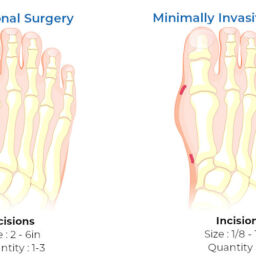
- How is lapiplasty different from traditional bunion surgery? Traditional bunion surgery removes the bony bump in 2D and doesn’t address the underlying joint instability. Lapiplasty corrects the root cause.
- How long does recovery take? Most patients bear weight within days. Transition to comfortable shoes typically happens around months 2 to 3. Full recovery takes 4 to 6 months.
- Am I a candidate for lapiplasty? Good candidates have bunion pain that conservative treatment has not resolved, or a bunion that returned after prior surgery.
- What are the risks? Risks include infection, nerve injury, and hardware complications. Dr. Purtuc will review your specific risk profile before proceeding.
What is lapiplasty 3D bunion correction?
Lapiplasty 3D bunion correction is a patented surgical system developed by Treace Medical that corrects the root cause of bunions. Most bunions develop because of instability in the joint at the base of the big toe. That instability lets the metatarsal bone drift out of position over time, creating the visible bump. Traditional bunion surgery cuts the bone to reduce the bump, but it doesn’t address the unstable joint underneath. Lapiplasty corrects the problem in three dimensions at once, fixing rotation, side-to-side drift, and elevation simultaneously. Low-profile titanium plating then holds the joint in place while it fuses. This is what makes the correction more durable than traditional approaches.
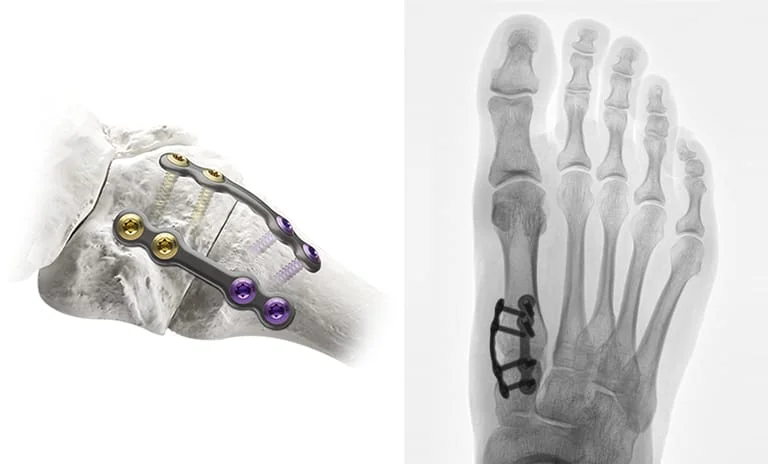
How does lapiplasty differ from traditional bunion surgery?
The core difference is what each procedure actually corrects. Traditional bunion surgery (osteotomy) cuts and shifts the metatarsal bone in 2D to reduce the visible bump. That approach doesn’t stabilize the joint that caused the bunion in the first place, which is why recurrence is a recognized problem. Lapiplasty targets the unstable tarsometatarsal joint directly, correcting deformity in all three planes. Research published in Foot & Ankle International has reported favorable outcomes and reduced recurrence rates compared to conventional osteotomy. Patients can also bear weight earlier with lapiplasty than with most traditional techniques.
Who is a good candidate for the lapiplasty procedure?
You may be a candidate for lapiplasty if conservative treatments haven’t given you enough relief and your bunion is limiting your daily life. Candidates typically include patients who:
- Have tried orthotics, wide shoes, and padding without success
- Experience daily pain or have very limited footwear options
- Have significant joint instability at the base of the big toe
- Have a bunion that returned after a previous traditional bunion surgery
Lapiplasty isn’t right for every patient. Those with certain bone quality issues, very mild deformities, or specific vascular conditions may be better served by another approach. Dr. Purtuc will review your imaging and symptoms at our Vero Beach foot and ankle office to determine the best surgical option for your situation.
What are the recovery times after lapiplasty?
Recovery after lapiplasty is faster than most patients expect, especially compared to traditional bunion surgery. Most patients are weight-bearing within days in a surgical boot. Here’s a general recovery timeline:
- Days 1-2: Protected weight-bearing in a surgical boot.
- Weeks 2-6: Gradual activity increase, still in the boot.
- Months 2-3: Transition to comfortable shoes.
- Months 4-6: Return to most foot and ankle physical activities.
Individual recovery depends on age, overall health, and how well the fusion progresses. Dr. Purtuc monitors healing with imaging at follow-up appointments and adjusts your activity plan accordingly.
Lapiplasty® 3D Bunion Surgery Case Examples
Constructs at surgeon’s discretion. Individual results may vary. These experiences are specific to these patients only.
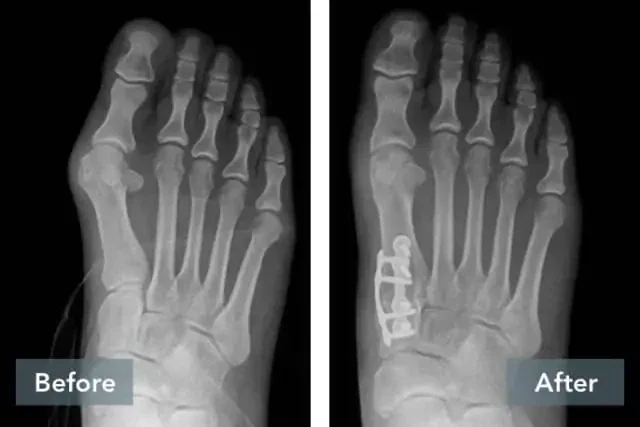
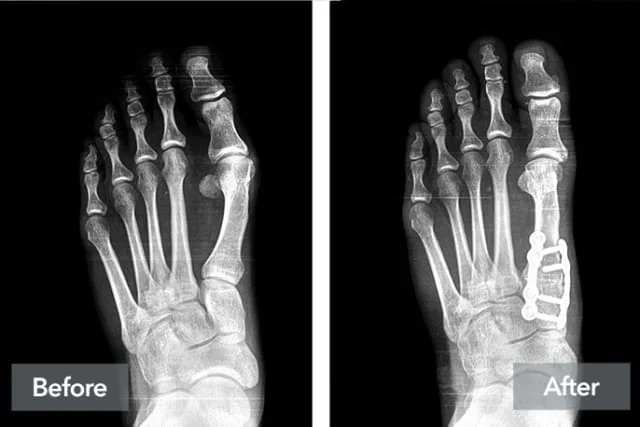
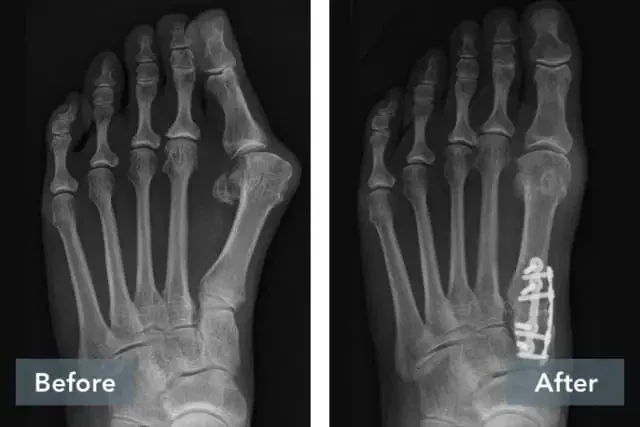
When should you see a podiatrist about a bunion?
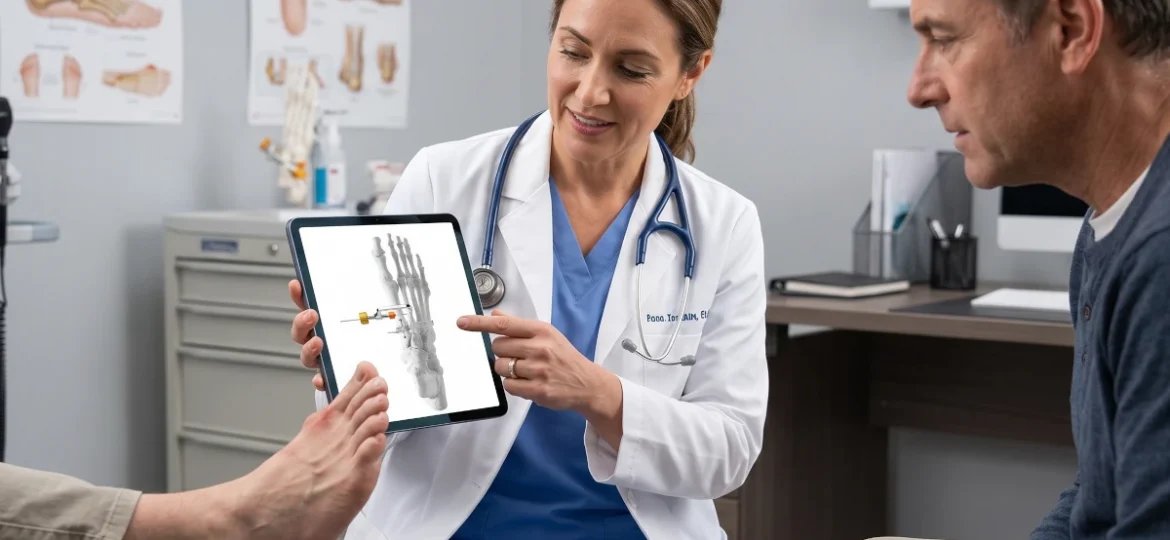
Don’t wait until the pain becomes unbearable. If your bunion limits footwear choices, interferes with daily activity, or has returned after a prior surgery, a professional evaluation is the right next step. Dr. Purtuc assesses bunion severity, confirms whether surgery is appropriate, and evaluates whether lapiplasty is the right fit for your anatomy and lifestyle. As a Treace Medical-certified surgeon with 15 or more lapiplasty procedures performed, he brings hands-on experience that general podiatry practices may not offer. Earlier evaluation means more options.
Ready to Find Out if Lapiplasty Bunion Correction Surgery Is Right for You?
If conservative treatment hasn’t helped or your bunion has returned, lapiplasty 3D bunion correction may be the permanent solution you’ve been looking for. If you’re considering treatment, learn more about our lapiplasty 3D bunion correction service with Dr. Radu Purtuc, a Treace-certified surgeon at Certified Foot and Ankle Specialists in Vero Beach who provides comprehensive bunion evaluation and surgical care. We see patients throughout South Florida, including Boca Raton, West Palm Beach, Boynton Beach, Fort Myers and Tampa.
Consult with Dr. Radu Purtuc or one of our board-certified podiatrists at Certified Foot and Ankle Specialists. Our doctors will assess your condition and determine whether lapiplasty 3D bunion correction is the right treatment for your bunion. Contact us to schedule a consultation using the links below.

Dr. Radu Purtuc
Written by Certified Foot Team | Medically Reviewed by: Dr. Radu Purtuc, DPM
Dr. Purtuc is a board-certified podiatrist specializing in foot and ankle surgery. He is Treace Medical-certified in the Lapiplasty procedure and has performed 15 or more lapiplasty procedures, as recognized on the official Treace surgeon locator. He also holds additional credentialing in Reconstructive Rearfoot/Ankle Surgery.
Frequently Asked Questions: Lapiplasty 3D Bunion Surgery Correction
Q: What is lapiplasty 3D bunion correction?
A: Lapiplasty 3D bunion correction is a surgical system that corrects bunions by stabilizing the unstable joint at the base of the big toe with low-profile titanium plating. Unlike traditional surgery, it corrects deformity in three dimensions simultaneously, fixing rotation, side-to-side drift, and elevation. This approach targets the root cause of bunion formation rather than just the visible bony bump.
Q: How is lapiplasty different from traditional bunion surgery?
A: Traditional bunion surgery cuts and repositions the metatarsal bone in 2D to reduce the visible bump, but does not address the unstable joint that caused the bunion. Lapiplasty corrects the underlying joint instability at the tarsometatarsal level in all three planes and secures it with titanium plating, which significantly reduces recurrence. Research published in Foot & Ankle International has reported favorable outcomes with lapiplasty compared to conventional osteotomy.
Q:Who is a good candidate for lapiplasty?
A: Good candidates for lapiplasty include patients whose bunion pain has not responded to conservative treatments such as orthotics, wider shoes, or padding, and patients whose bunion has returned after a previous traditional surgery. Significant joint instability at the base of the big toe is also a key indicator. Dr. Radu Purtuc at Certified Foot and Ankle Specialists in Vero Beach, a Treace-certified lapiplasty surgeon, can evaluate your imaging to confirm candidacy.
Q: How long does recovery take after lapiplasty?
A: Most lapiplasty patients begin weight-bearing within days of surgery in a protective boot. The transition to comfortable shoes typically occurs around months 2 to 3, with most patients returning to full physical activities between months 4 and 6. Individual recovery depends on age, overall health, and how well the joint fusion progresses, which your surgeon monitors with imaging follow-ups.
Q: Does lapiplasty prevent bunions from coming back?
A: Lapiplasty is designed to significantly reduce bunion recurrence by correcting the root cause, unstable joint mechanics, rather than just removing the bony bump. Because the procedure fuses and stabilizes the tarsometatarsal joint with titanium plating, the structural reason bunions return is addressed directly. While no surgery guarantees a bunion will never recur, lapiplasty has shown favorable long-term outcomes compared to traditional osteotomy.
Q: Where can I find a lapiplasty surgeon in Florida?
A: Dr. Radu Purtuc at Certified Foot and Ankle Specialists in Vero Beach, Florida is a Treace Medical-certified lapiplasty surgeon who has performed 15 or more lapiplasty procedures and is listed on the official Treace surgeon locator. Certified Foot and Ankle Specialists also serves patients at multiple other Florida locations, including Boca Raton, Tampa, West Palm Beach, and Boynton Beach.